
What twenty-plus years of travel taught us about great hospitality, great design, and the rooms worth obsessing over
Some of our most valuable design research at Shea, Inc. has happened far from the office. Over more than twenty years and millions of miles of traveling the world together, we—David and Tanya, owners of Shea—have experienced hundreds of hotels, from quietly exceptional hideaways to unapologetically over-the-top icons. Along the way, we have developed a sharp eye for what truly makes a hotel memorable: not just style, but service, flow, materials, lighting, livability, and the small details guests never forget.
We are sharing these reflections in that spirit—as both inspiration and education—because the same curiosity that has shaped our travels continues to shape how we think, design, and create experiences for our clients every day.
The following is an adapted excerpt from an upcoming collection of travel and life stories that is somewhat chaotically becoming a book.
The Quest
Our new challenge became finding the perfect hotel experience.
And yes, naturally, the goal was to create one ultimate Top Ten list of the best of them. In all our years and all our travel, we had never actually managed to make that list. We either lost focus or lost interest or simply couldn’t decide. Usually all.
We would read the Travel + Leisure or Condé Nast readers’ polls and mock their rankings with total confidence. They might get one or two right, but mostly they had no idea what they were missing.
And it was never just about finding the best hotel. It was about finding the best room in that hotel—not necessarily the most expensive one. We had multiple cases of hotel FOMO where, from our own terrace, we could see a clearly superior room and then had to spend the next twenty-four hours emotionally adjusting.
In the beginning of our travels, we appreciated beautiful hotels, but the actual room mattered less because we spent less time in it. After enough years, enough miles, and enough nights in hotel rooms, that shifted dramatically.
When you found a brilliant room in a beautiful hotel, that was the holy grail.
Our hotel snobbery did not come easily.
It was learned.
Earned.
And expensive. In both research time, and money.
The Dubai Rookie Era
One of our favorite early memories in the quest for the perfect hotel experience was booking just one night at the Burj Al Arab, the sail-shaped hotel in Dubai. The Burj Khalifa was still being built at the time, so this was more than twenty years ago. We decided we needed to splurge for at least one night in what was then one of the most expensive hotels in the world. Dubai was a haul to get to, so clearly we deserved one absurd night before moving on to something much more reasonable. Mostly, we just wanted to see whether it was worth it.
Our taxi pulled up to the gate, we were allowed through, and David and I walked up the stairs, gave our names, and were escorted up the iconic escalator to check in. The whole place felt over-the-top and gloriously gaudy, like the inside of Jeannie’s bottle in I Dream of Jeannie if someone had given her a larger gold budget and no adult supervision.
A front-of-house staff member met us at the top and escorted us into an elevator for our “personal check-in experience.” We followed him into a massive hospitality suite with a grand piano, a full bar, a spiral staircase, and giant windows overlooking all the insane Dubai development.
After a little orientation and the formalities, the gentleman said, “I hope you enjoy your stay.”
David and I looked at each other.
Then at him.
Then back at each other.
I finally said, “Where is our hotel room?”
He smiled. I assume we were not the first. I sincerely hope we were not the first.
“You’re in it.”
Absolute rookies.
And in true rookie fashion, I stuffed as many Bulgari toiletries as physically possible into my bags from our two-story, three-bathroom hotel room.
Why We Became Hotel Snobs
At this point in life, we really should have become hotel critics.
David’s attention to design, layout, detail, and lighting was one part of it. My hard-earned opinions about product brands, sheets, towels, toiletries, and actual livability was the other. Do not get either of us started on luggage racks, bathroom lighting and usable counter space. Add the fact that, at our peak, we were spending around 150 nights a year in hotel rooms, and we had the credentials whether anyone asked for them or not.
And we paid attention.
Mostly, I paid attention to David.
He still endlessly quizzed me on wood species, stone species, what would age beautifully, what would fail spectacularly, what made sense, and what was merely decorative nonsense. It was as if he was trying to make sure all the information in his head found a foster home before it disappeared.
In hotels that advertised some celebrity designer as a big marketing draw, we would privately catalogue every rookie mistake past the grand, highly photographed lobby. Then we would go back to the office and pass along the lessons to everyone at Shea—what to do, what never to do, and what only looks expensive but is actually just wrong.
Our firm designed far more restaurants than hotels for years, so we had always done this with restaurants, including the deeply irritating early-morning emails back to the office from impossible time differences. Now we were adding hotels to the curriculum.
As we started working on more small hotels ourselves, we became even more determined to turn all those expensive hotel bills into a masterclass in hotel design.
What Actually Makes a Hotel Great
If we had a memorable hotel experience, we became ferocious advocates. What makes one memorable? Usually some combination of:
- location
- service
- design, both aesthetics and common sense
- style
- in-room products and amenities
- outdoor space
- common areas
- view
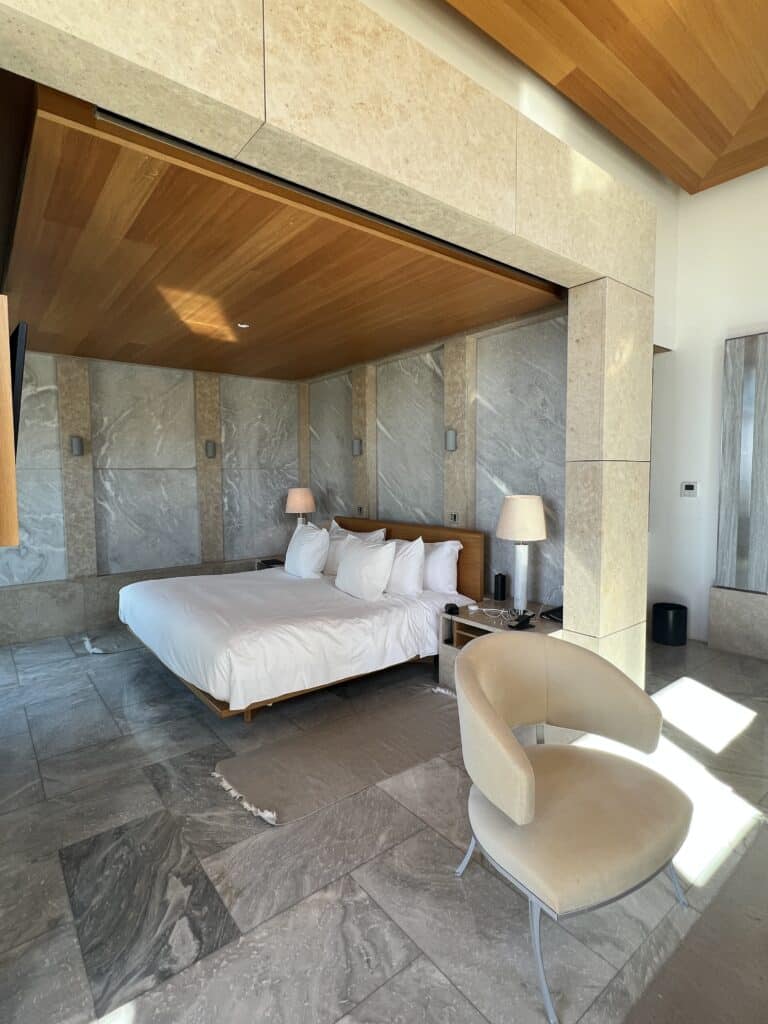
Great service can rescue a multitude of sins. Poor service and bad attitude can ruin a gorgeous room. A spectacular view can make up for a surprising amount. A bathroom that floods every time you shower can cancel out almost all of it.
Something surprisingly simple—like not having to beg for water—is a huge plus. Hotels where the minibar is free score major points.
Even though there is no such thing as the perfect hotel experience, there are many that checked all the boxes.
Those were the ones that earned repeat visits.
Those were the ones that made the list.
The ultimate Top Ten list we had been chasing for years.
The Near-Misses, the Letdowns, and the Overrated Darlings
San Ysidro Ranch in Montecito, California, unsurprisingly, always made the list. It had been road-tested hard by us and, with the exception of a few rooms, it rarely disappointed. A very, very close second is the five-room SingleThread Inn in Healdsburg, if you get the room with the balcony overlooking the little town. SingleThread has some of the best products, towels, sheets, quilts, and service anywhere. And as a three-star Michelin property, the breakfast is legendary.
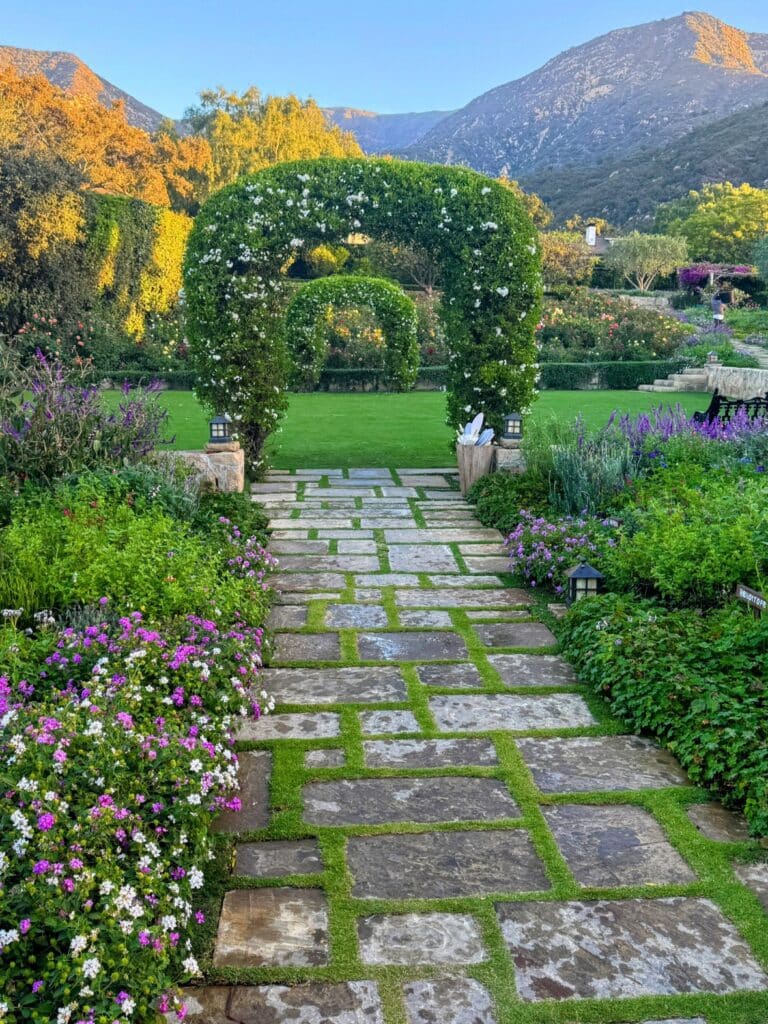
San Ysidro Ranch
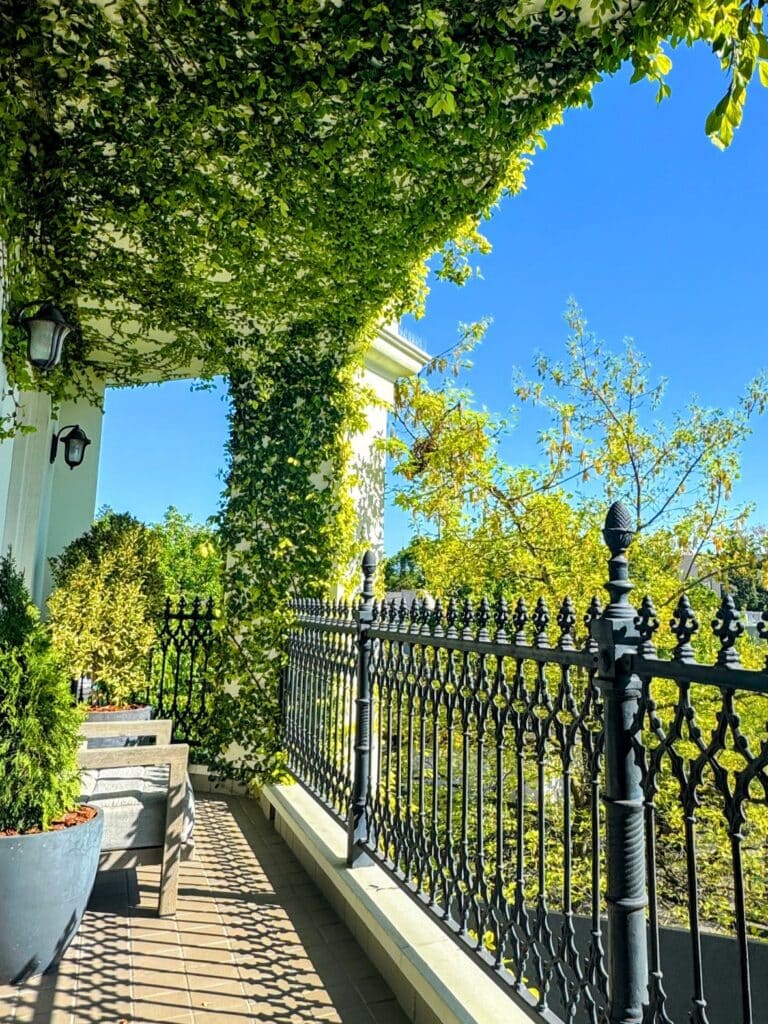
SingleThread Inn
When it came to other U.S. hotels, we were harsh.
Amangiri in Utah has a spectacular, middle-of-nowhere setting and a highly photographed pool. We did not love the deliberate coldness of the rooms or the limited view corridors. Bardessono in Yountville has a terrific location, good outdoor space, and comfortable rooms with generous terraces, but you have to know exactly which room to request so you are not paying premium money to overlook a parking lot. And the design of the restaurant is laughably bad.
In Miami, every hotel with a water view seems convinced that this justifies a wildly inflated rate and a terrace barely large enough to hold a chair and your resentment. At the Four Seasons Surf Club, which is beautifully restored and undeniably elegant, it is usually too windy to sit on the tiny terrace anyway.
We loved Blackberry Farm when it was smaller. And we truly loved how they trained their trout to practically leap onto your fly-fishing line. Now it is almost too big. No shade—hotels have to make money, people must continue living, and the world refuses to organize itself around my preferences—but we are still entitled to our opinions.
You cannot beat the drama and views at Post Ranch Inn, though we continue to wish it were closer to an actual town like Carmel.
We have a love-hate relationship with many New York hotels. The Aman is spectacular, but it is not in our preferred part of the city. I loved the common spaces and free candy in the rooms at the Greenwich Hotel, but preferred the location of the Bowery Hotel, even with the questionable teddy bears they put on every bed. I loved the teddy bear at first. Then we went deep and dark imagining how much that bear had seen, and the magic was ruined forever.
Once you open it up to the rest of the world, it gets even more complicated.
Do not get us started on Mexico.
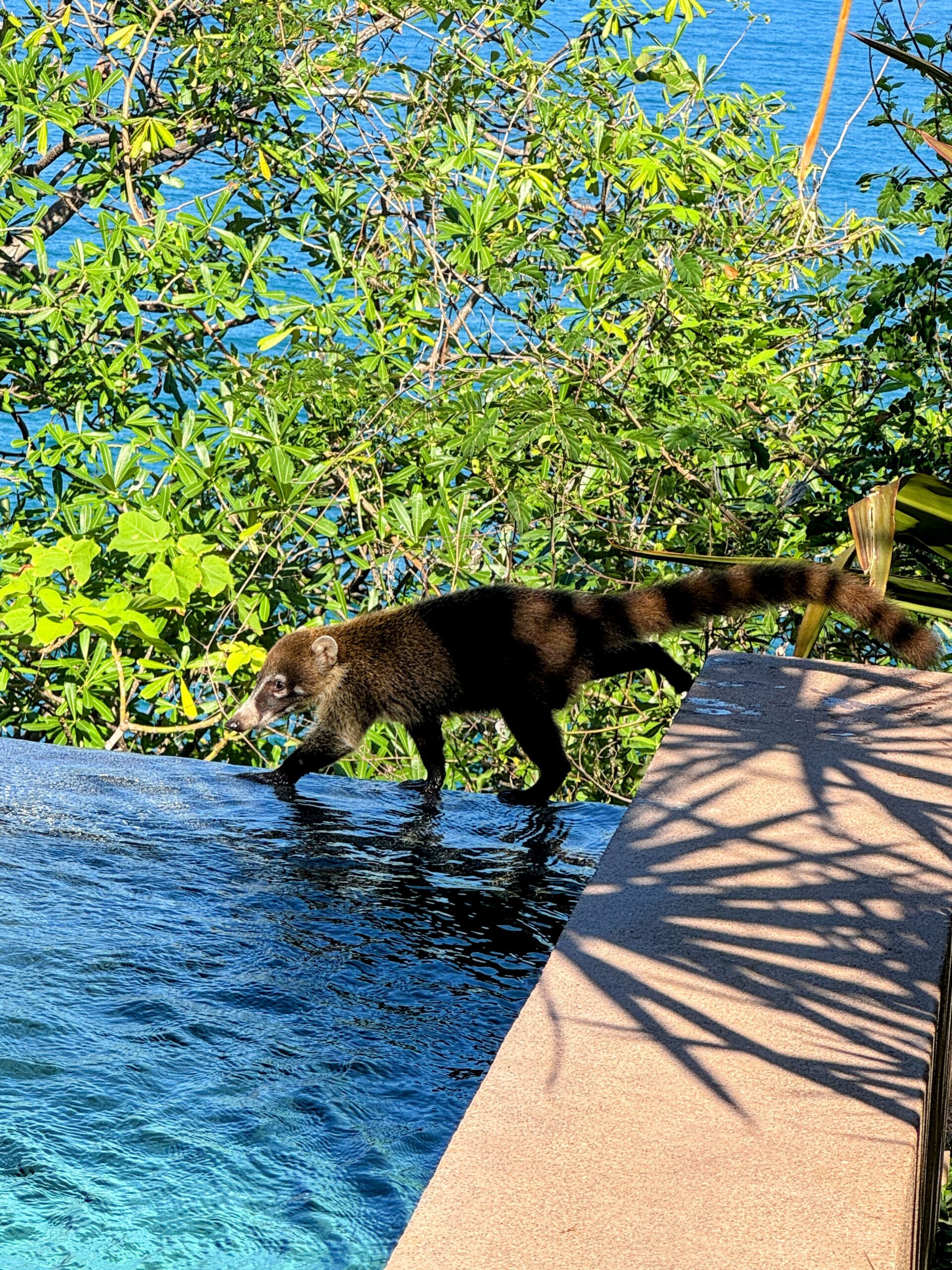
Our room at the One&Only Mandarina was stunning. The resort itself is a little too resort-y overall, but the real reason it never makes the list is that we could not keep the doors open for more than thirty seconds without coatis—basically raccoons with better branding—coming into the room and eating from our fruit bowl. Then the little bastards had the audacity to wipe their paws on our sofa. Then go for a walk through our pool.
In San Miguel de Allende, both the Belmond and the Rosewood get dangerously close to making the list, especially if you get the rooms with the great terraces or rooftop. It is just that when you compare them to the final contenders, they always become a footnote.
The Aman hotels usually deliver a very strong full experience. Same with Six Senses. Most Rosewoods—shout out to Luang Prabang—and some Belmonds really stood out. And yet the ones that always landed on readers’ and editors’ favorites lists were often the ones we found a tad disappointing. Like Castiglion del Bosco, billed and priced as one of the best luxury experiences in the world. The location and the fact that they essentially took over a small village in the heart of Tuscany rivals any Aman. Yes, it was luxurious. Yes, we loved it. We just have had better.
We loved almost everything about the Christian Louboutin-designed Vermelho in Melides, Portugal—from its tiny-town location to the eccentric design, details, food, and outdoor spaces. Our room was huge and handsome, and we loved the balcony, the grounds, the gardens, all of it. It just had a few minor room-detail dings that kept it from the top.
Verride Palácio Santa Catarina in Lisbon sits in a near-perfect spot in the city. Our room was almost as big as our loft at home, with views and glorious service. The bathroom alone took it out of the running.
The Amanzoe in the Peloponnese is unquestionably stunning, and the room itself was one of our favorites, even with too many steps up and down for middle-of-the-night wandering. We just could not get over all the fake Greek theatricality, especially after David yammered on about how inauthentic it was every chance he got.
Villa Igiea and San Domenico Palace—yes, the White Lotus one—both in Sicily, were unarguably beautiful hotels, and we loved our balcony rooms overlooking the water. They do not make the list because they are both too much of a “big hotel” experience and the rooms are a little too formulaic.
Hôtel de Pavie, in the heart of beautiful Saint-Émilion, has made the list many times only to be cruelly ejected at the last minute. Perfect location, pretty details, elegant rooms. The rooms are just a little too European in layout to survive the final cut.
Villa René Lalique could nearly make the list on breakfast and products alone.
Many hotels in Milan are so over-the-top and interchangeable that none of them truly deserve the list. The Armani alone would easily be number one on someone else’s, complete with Armani branded everything. Rosa Alpina in the Dolomites, now also an Aman, almost deserves a spot. Maybe. But only if you get exactly the right room and can tolerate the staff’s occasional pretentiousness. This was pre-Aman, to be fair.
In Venice, the Aman wins on the Grand Canal. It is not on the list mostly because it is competing against too many other Amans. We also nearly give an honorable mention to Londra Palace for location and view alone, especially if you score a room directly on the waterfront promenade overlooking the Venetian lagoon and the islands of San Giorgio and Giudecca.
The Royal Champagne in Champagne is unquestionably over-the-top luxury. The views, terraces, amenities, rooms appointments, products and art make it feel almost absurdly polished. When we moved on a few days later to Reims, the Domaine Les Crayères gave its luxury a run for its money, in a very different style.
The same goes for La Mamounia in Morocco. Over-the-top luxury. It would be top five on any normal person’s list, but a little big and predictable for us.
Ellerman House in Cape Town is perfect in almost every way. Small, detailed, polished, astonishing service, beautiful amenities, and views for days. It got bumped because, while the views are fabulous, it is not terribly walkable to anything.
While we’re on Africa, the safari lodges deserve their own list. Especially the ones that offer outrageous luxury with a side of giraffes or elephants—or a baboon that moons you as he walks by. That is tough to compete with.
Le Pavillon de la Reine is almost our Paris version of San Ysidro Ranch, right up there with La Coquillade in Provence. We have stayed there more times than we can count. If you get the right room, it feels like your own Paris apartment, complete with French doors opening onto the street and the courtyard. At La Coquillade, if you get the suite at the top of the hill, you are basically in heaven.
Storfjord Hotel outside Ålesund in Norway was a beautiful, intimate cabin-like hideaway in a deeply peaceful middle-of-nowhere place. That is, until I woke in the middle of the night to David shouting, “Are you f***ing kidding me?” at the sight of a giant lit-up cruise ship sliding down the narrow fjord outside our window. It does not make the list because it is just a little too middle of nowhere, which makes the food lovely but a touch repetitive. We did not tire of drinking champagne beside the wood-burning outdoor fire on fur-lined Adirondack chairs, though.
The Vik in Chile and Hotel Marqués de Riscal in Spain win points for wow-factor exterior architecture. Unfortunately, there was almost nothing right in the interiors. It was all design for the sake of design, not about the guest experience. (Although the Vik, also a winery, was considerably better).
Four Seasons and Ritz both work hard and are solid choices anywhere in the world, but they are also big chains with a heavy focus on residences now. Again, no shade. Everyone is trying to make a living.
I could go on and on. In fact, I could probably write an entire book of hotel and room recommendations.
The Top Ten, or Something Close to It
We’ve dedicated our extra time, resources and money pretty exclusively to travel. To learn, absorb, explore. If you are lucky enough to travel the world as obscenely as we do, there are some truly special hotel rooms and hotel experiences that, feet to the fire, we would still blurt out as our favorites. That became our Top Ten list. Or maybe eleven. Or at least the list right now.
In addition to the already-mentioned San Ysidro and Single Thread, the following always rose to the top, even among all the previously mentioned heavyweights:
Six Senses Zighy Bay, Oman
To get to Zighy Bay, you come straight out of the desert, drive for what feels like forever, and suddenly crest a small mountain to look down on the bay perched on the Gulf of Oman, with Iran somewhere across the water. It was maybe our first true wow-factor hotel: dramatic, remote, and incredibly cinematic, with beautiful rooms right on the beach and that rare feeling that you had arrived somewhere genuinely singular. It really was a once-in-a lifetime location and experience.
Amanoi, Vietnam
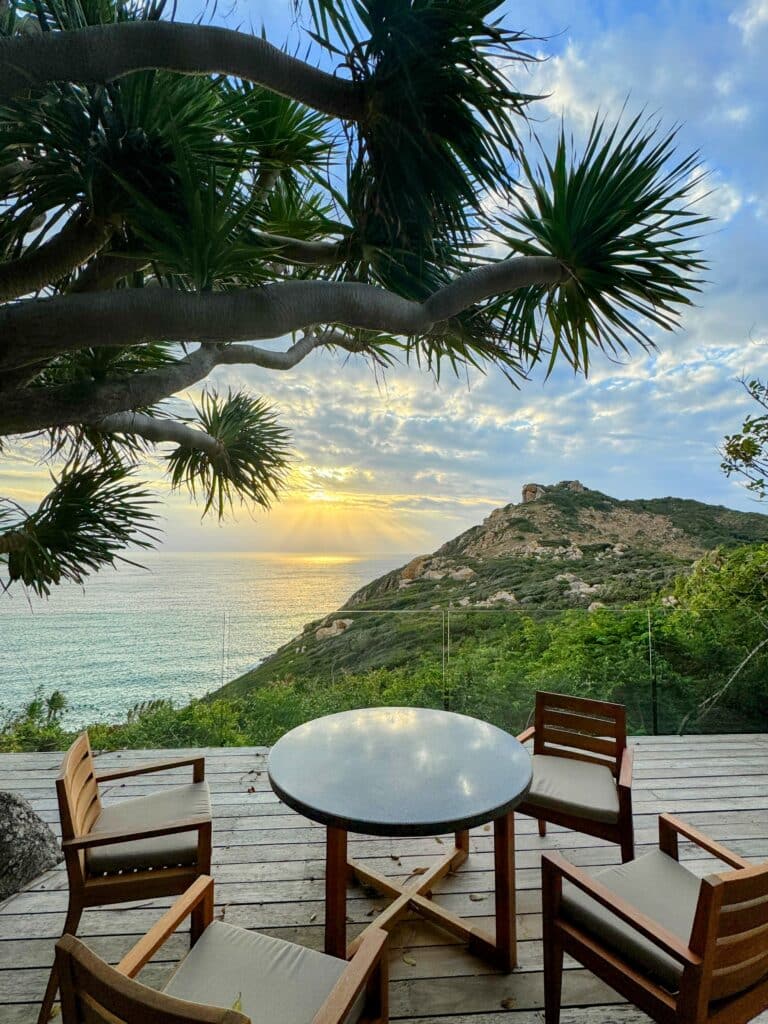
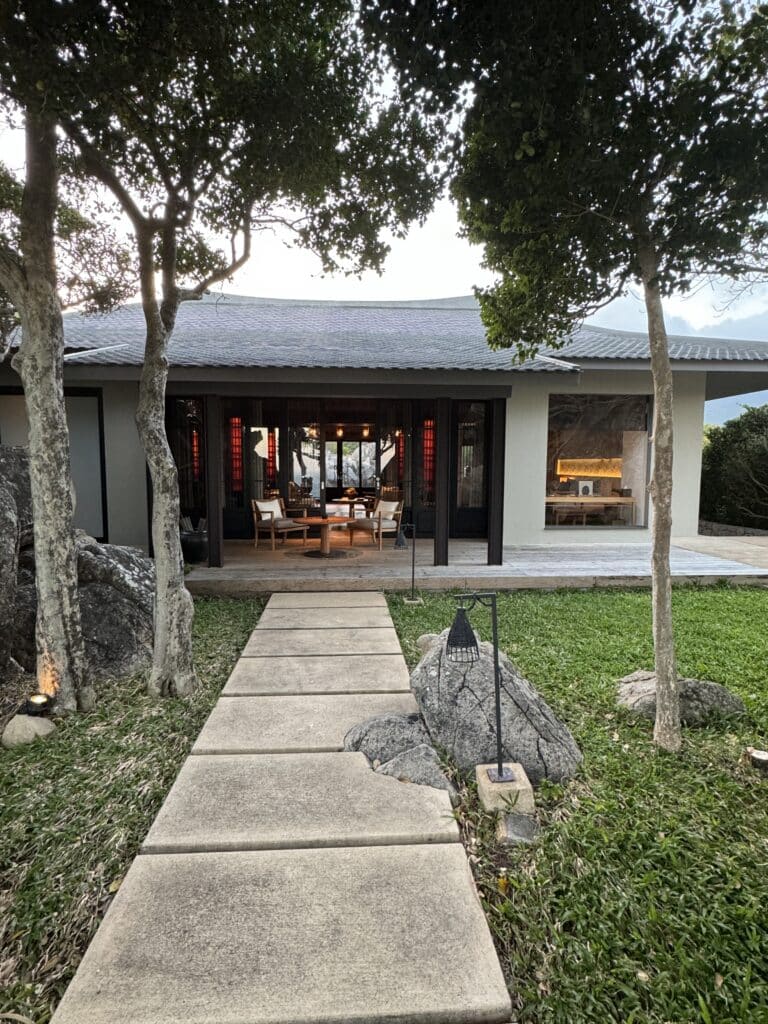
If forced to pick one favorite Aman, this would probably be it. It was the hotel we fought our way to after our trip exploring Laos, and it was absolutely worth it. Every part of it was exquisite, especially our room high above the South China Sea in Vietnam. A very close Aman runner-up would be Sveti Stefan in Montenegro, particularly if you split your stay between the beach villa and the historic island village. Easily one of the most uniquely designed hotel experiences we have ever had. And Aman branded products and mini bar freebies really round out the experience.
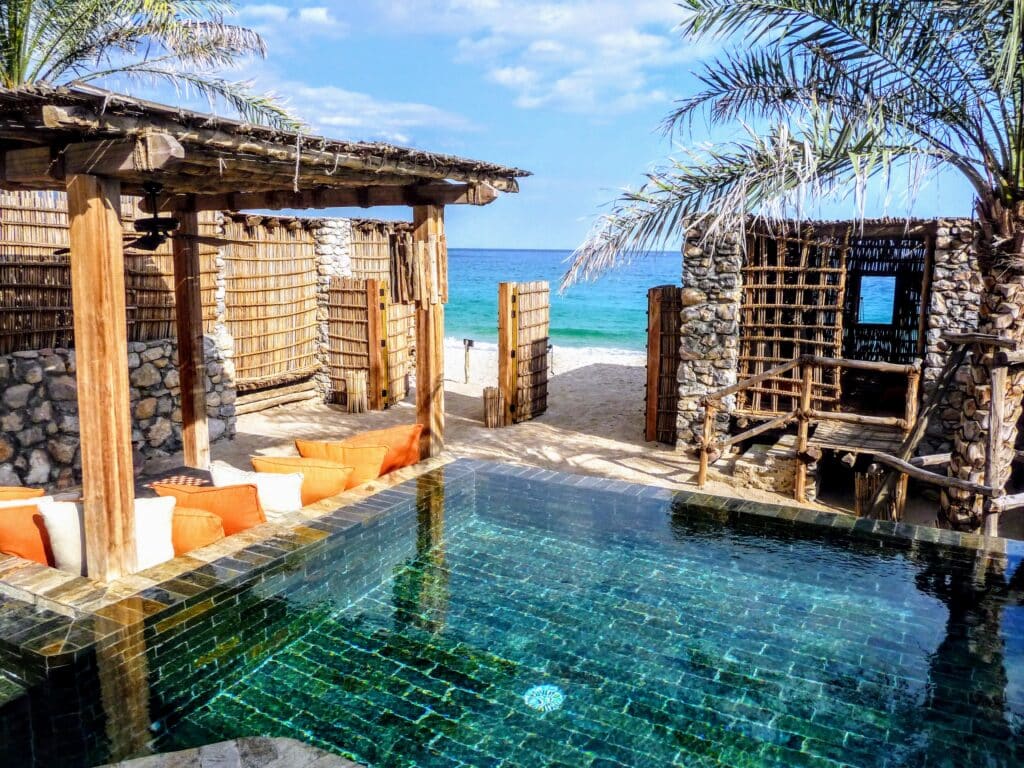
Six Senses Zighy Bay
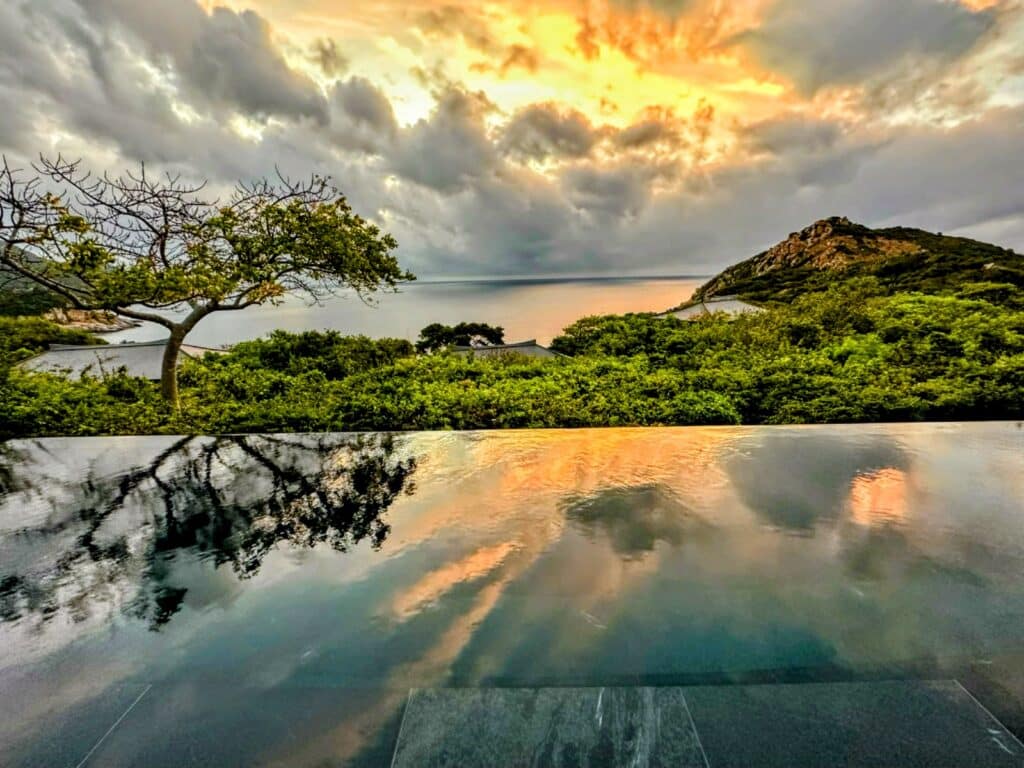
Amanoi
The Nam Hai, Vietnam
Speaking of the South China Sea, our room at this jewel outside Da Nang and Hoi An sat right on the water, with the sound of waves crashing all night. The only reason it occasionally gets bumped from the list is the multi-level layout, which makes middle-of-the-night bathroom visits a potential catastrophe.
Reid’s Palace, Madeira
The hotel is marvelous all around—service, setting, gardens, views, location, room amenities and ample places to put your luggage. But the real reason it makes the list for us is Winston Churchill’s room. I can absolutely see myself going back to Madeira once a year just to stay there again. It was here I decided to write a book. Thank you, Winston.
The Tanneries, Crete
Outside Chania in Crete, The Tanneries is literally over the water if you get the right room. It makes the list because we found it early, it has a clean, quiet, understated aesthetic, and somehow it felt both subtle and seductive. Mostly, though, we loved throwing open the doors to both decks and letting the sea breeze off the Sea of Crete blow through the room. You could have breakfast, lunch, and dinner right by the water. We just loved it.

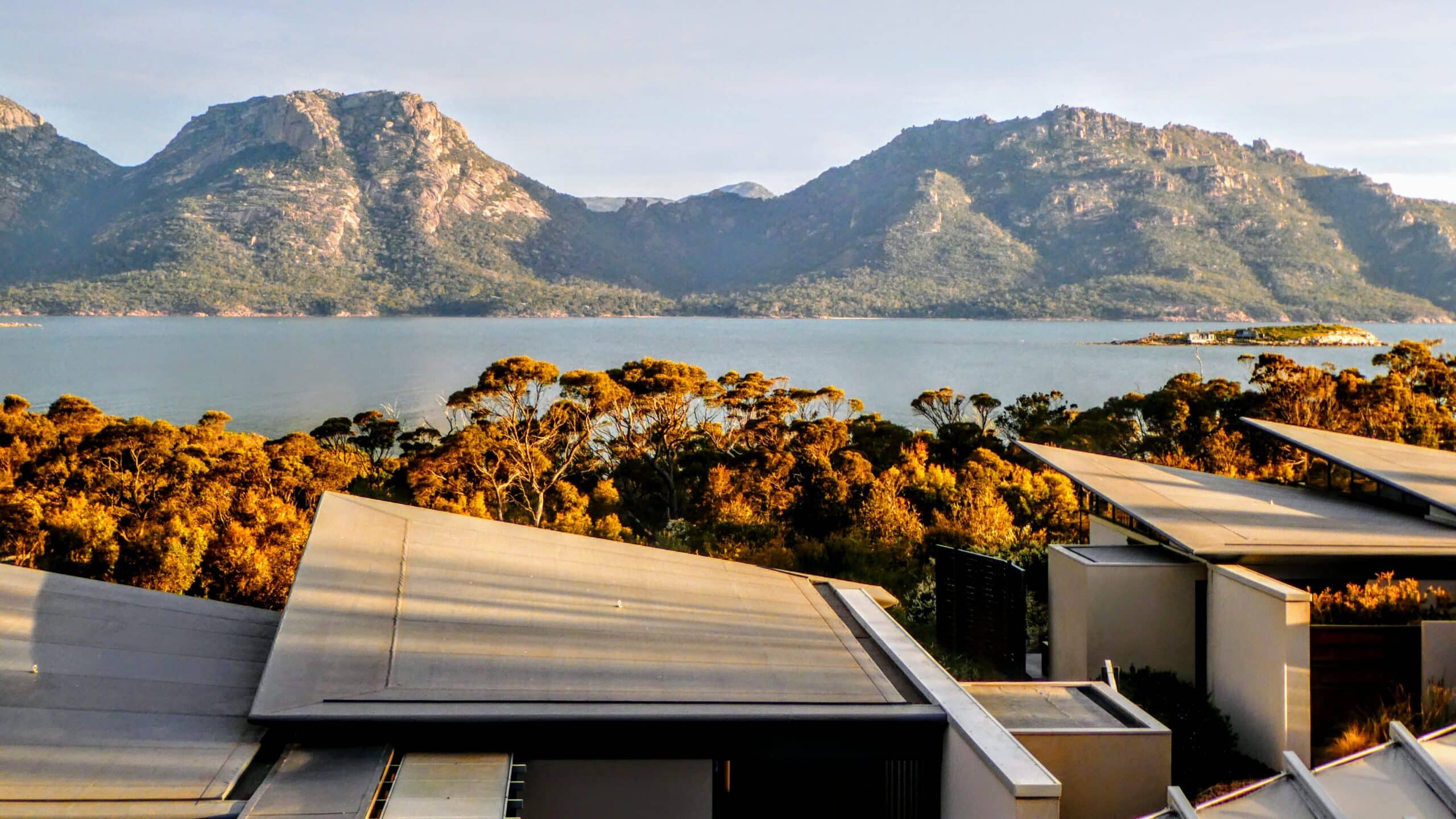
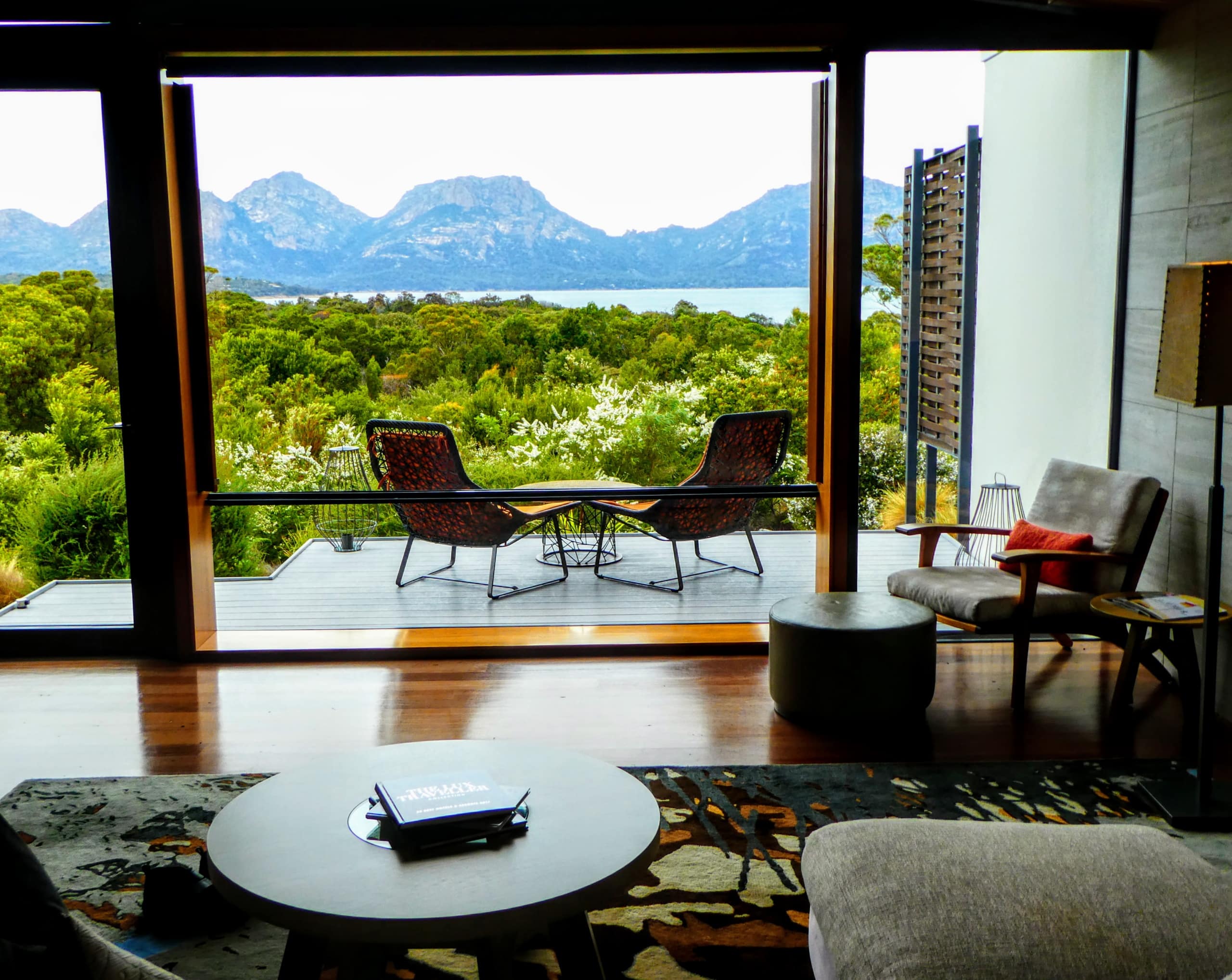
Saffire makes a very strong argument not only for the list, but perhaps the top of it. It is difficult to overstate the combination of complete perfection and a location so striking it borders on surreal. The rooms are not enormous compared with some others on the list, but they are almost perfectly scaled. It sits at the gateway to Freycinet National Park on Tasmania’s east coast. And as if that were not enough, it has its own refuge for aging Tasmanian devils. A luxury retirement village for devils.
There is simply nothing not to love. The Saffire was also notable for a completely free, daily stocked mini bar with drinks and snacks.
From there, the list gets ugly. Five more hotels fighting for three spots and all of them convinced they belong.
Blue Lagoon Hotel, Iceland
David rejects this one because he thinks it is too obvious. I keep it in the running because the location is so weird and wonderful: a room opening right onto the actual lagoon, surrounded by lava fields that look like another planet. It also introduced me to Blue Lagoon skincare products, which means it may have done more for me than some friendships. The icing was scampering up Mount Þorbjörn nearby, with panoramic views of the lagoon, Grindavík, and the Atlantic.
Ett Hem, Stockholm
This one surprises people, which makes me love it even more. In Stockholm, it immediately felt like home, if your home had exquisite common areas, actual style, and staff who quietly understood what they were doing. The right corner room in that quiet neighborhood was full of light, especially in summer when Stockholm just refuses to get dark.
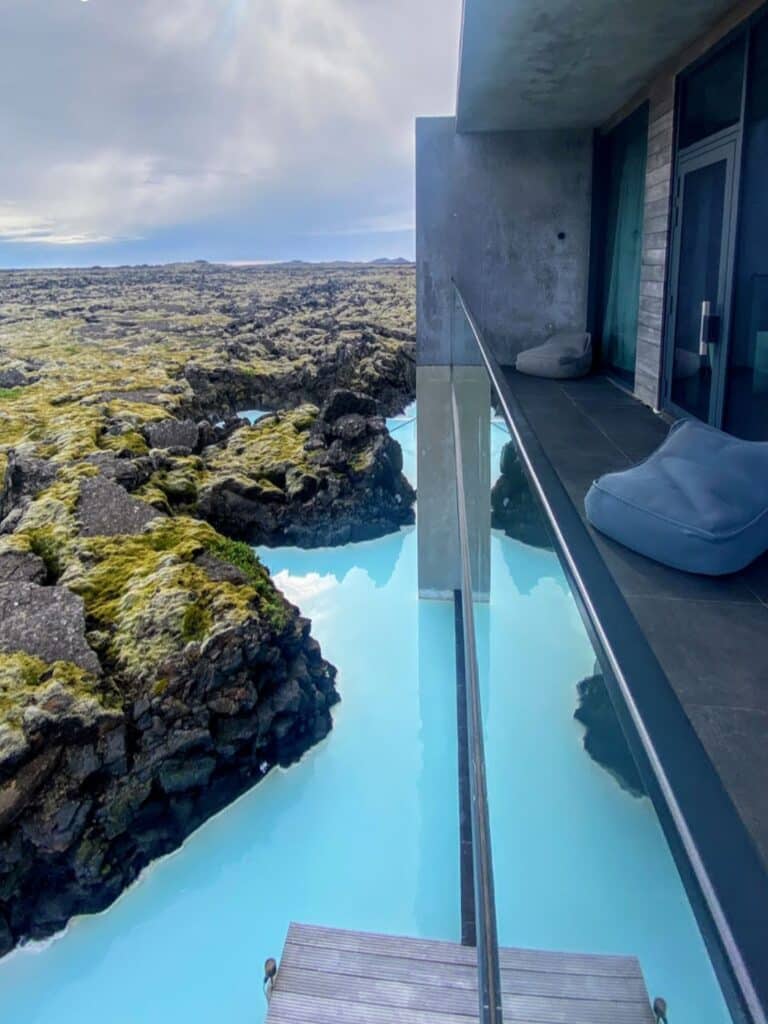
Blue Lagoon
Il Sereno vs. Casa Polanco vs. Casa San Agustín
The last spot becomes a blood sport between Il Sereno on Lake Como, Casa Polanco in Mexico City, and Casa San Agustín in Cartagena. All three are small, intimate, and have that same quality as Ett Hem—they feel less like a hotel and more like your very polished, very expensive home with full-time help.
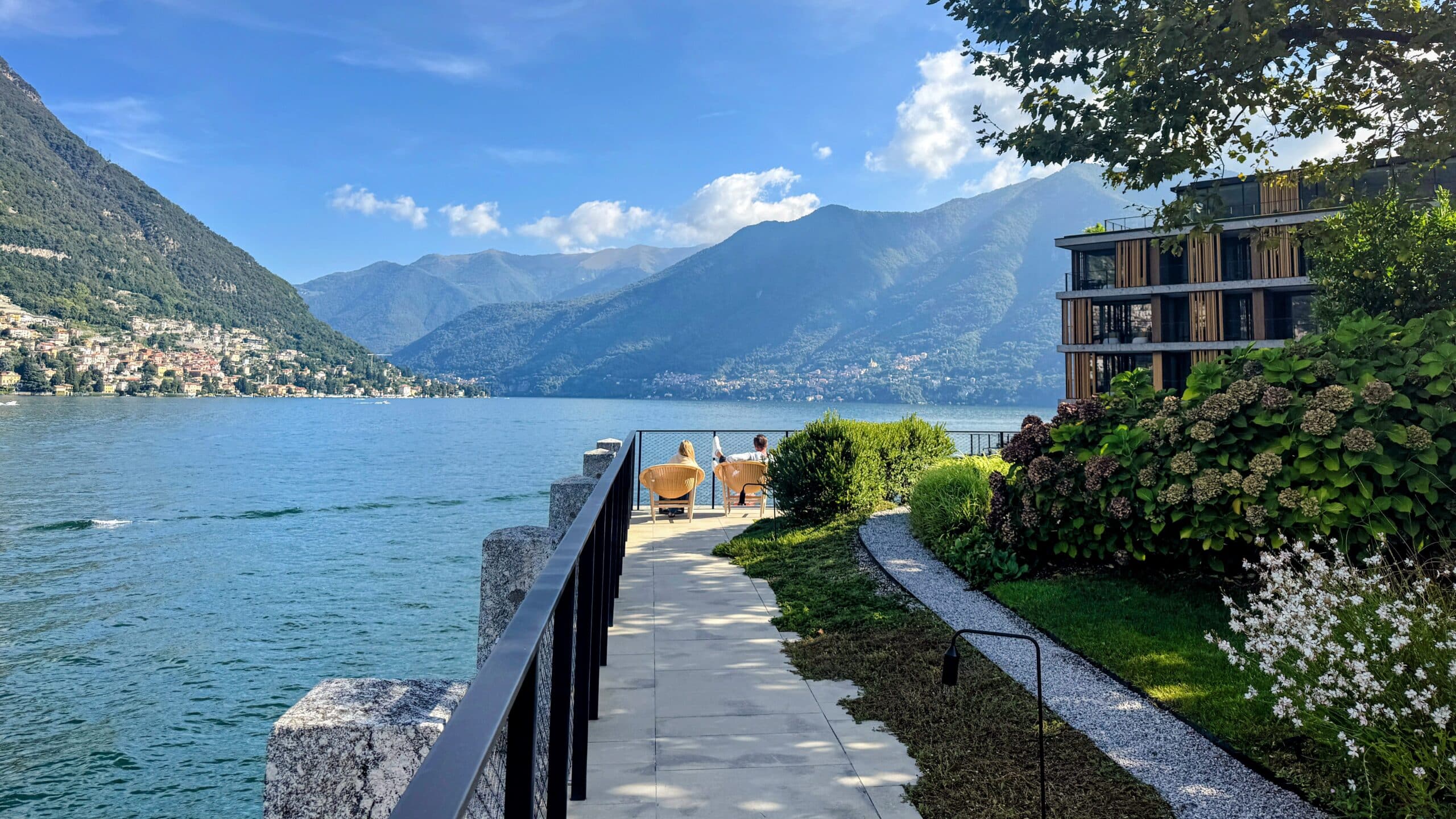
Il Sereno wins by a nose. For now.
It wins on view and location alone—right on the lake, in a small, not-too-touristy village, with the sound of waves at night and none of the more obnoxious Como energy. Since Lake Como itself can be aggressively touristy, that feels like a gift. It also helps that the property has a Michelin-starred restaurant and a very strong bar in an impressively small footprint. We prefer it hands down to all the big dogs on Lake Como. Although the terrace furniture is all about the photographs. Guests shouldn’t have to drag furniture out of the room and onto the terrace to be comfortable sitting outside.
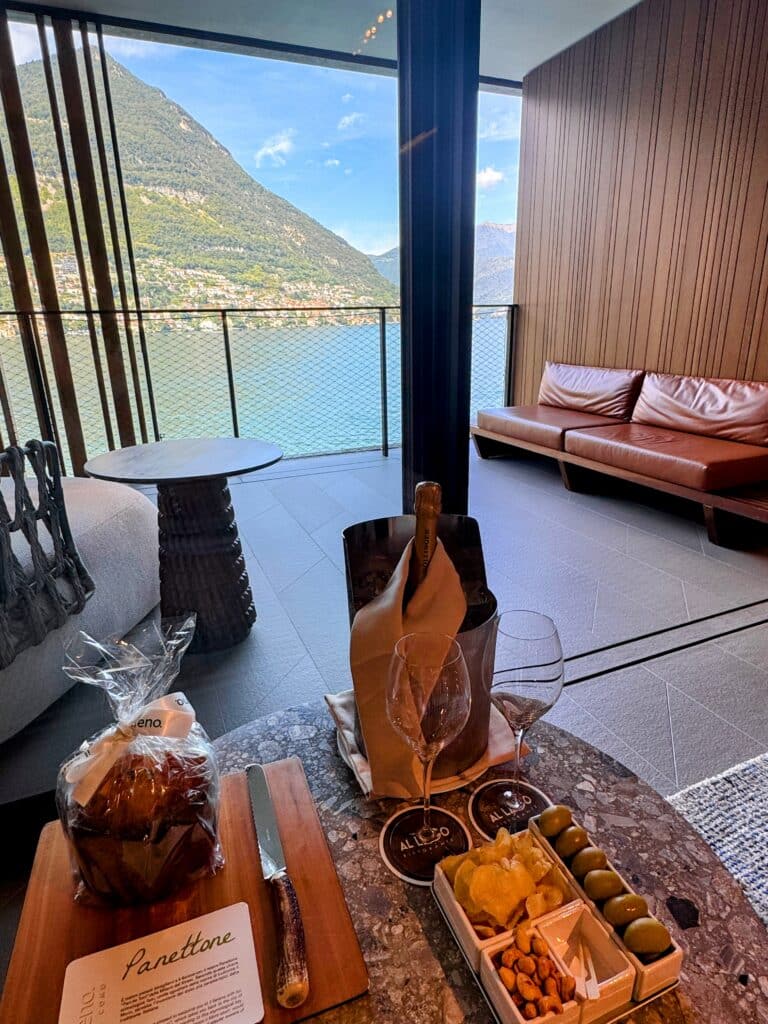
Il Sereno
Casa Polanco, on a park in Mexico City, is perfectly situated to explore the city and then escape it. Same with Casa San Agustín. We love hotels that let you have the energy of a vivid city while still feeling as if you have your own private balcony and a perfect digestif waiting for the evening air.
And the search continues. As absurd and obscene it is to many normal people to spend this much time in hotels, we’ve come to love it. And we also appreciate coming home and sharing the details.